
-
Epson Printer Questions? I’ve Messed Up So You Don’t Have To
-
1. What is the WPS button on an Epson printer? How do I use it?
-
2. Why is my Epson printer printing yellow?
-
3. How do I fix yellow printing on Epson printers?
-
4. What is a digital whiteboard, and how is it different from a printer?
-
5. Why do people search for “highlighter vape” and “highlighter makeup” when looking for printer help?
-
6. How can I improve printing efficiency in my office? (The efficiency-competitiveness view)
-
7. Final tip: The WPS button and yellow prints are connected more than you think
-
1. What is the WPS button on an Epson printer? How do I use it?
Epson Printer Questions? I’ve Messed Up So You Don’t Have To
I’ve been handling printer support for about 7 years now. In that time, I’ve personally made (and documented) 23 significant mistakes — totaling roughly $4,800 in wasted ink, paper, and rushed replacements. Now I maintain our team’s internal FAQ to stop others from repeating my errors. This article covers the questions I see most often, from WPS buttons to yellow prints, and even a few weird searches people land on when they’re actually looking for printer help.
1. What is the WPS button on an Epson printer? How do I use it?
The WPS button on your Epson printer stands for Wi‑Fi Protected Setup. It’s the easiest way to connect your printer to a wireless network — no need to type a long password. Just press the WPS button on your router first (usually blinking blue), then press the WPS button on your Epson printer within two minutes. The connection establishes automatically.
Here’s something vendors won’t tell you: not all routers support WPS (security settings often disable it). If the button on your printer does nothing after 60 seconds, you’ll need to connect via the standard setup menu. I once wasted an hour troubleshooting a WPS connection on a client’s network — turned out their IT guy had turned WPS off for security reasons. (Ugh.) Now I always ask first.
2. Why is my Epson printer printing yellow?
Nine times out of ten, yellow prints (or a strong yellow tint across everything) mean one of two things:
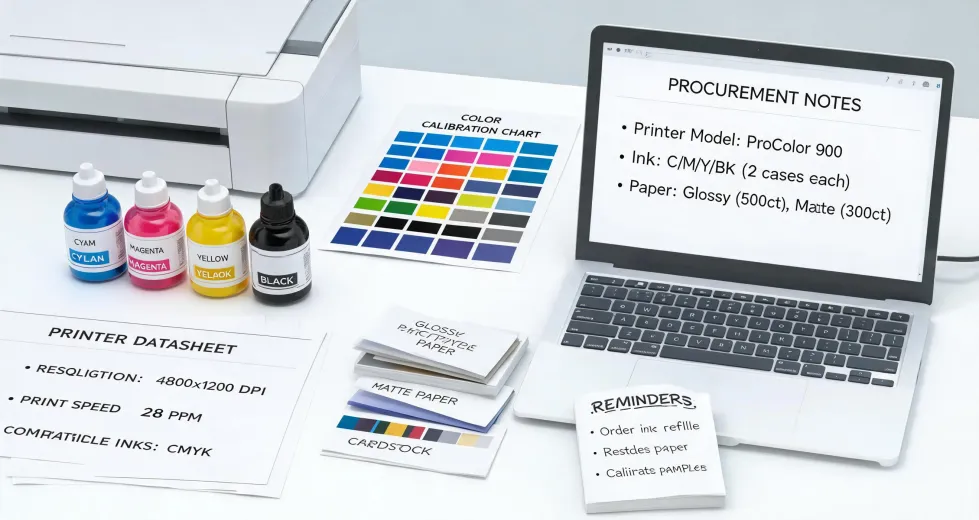
- Low or clogged cyan/magenta ink — the printer compensates by overusing yellow. The symptom is a yellowish cast, especially in photo prints.
- Wrong driver color profile — if you’re printing a document meant for RGB on a CMYK setting, the yellow channel can get boosted.
I learned this the hard way: in September 2022, I printed 250 brochures for a trade show. Every single one had a yellow tint. The client rejected the whole batch — $890 wasted plus a 1‑week delay. (Surprise, surprise: I hadn’t cleaned the print head in weeks.) A simple nozzle check and a head cleaning cycle fixed it. Since then, I run a nozzle check before any important print run.
3. How do I fix yellow printing on Epson printers?
Here’s a quick checklist I use (and I update it every time I mess up):
- Run a nozzle check from the printer’s maintenance menu. Look for missing lines in cyan, magenta, or yellow.
- If lines are broken, run a head cleaning cycle (usually 1–2 rounds). Don’t overdo it — too many cleanings waste ink.
- Check ink levels. If cyan or magenta are low, replace them even if the printer says “low” but not empty. Running with one low color can cause yellow tint.
- Update the printer driver and select the correct paper type in the print dialog. (This was true 5 years ago when profiles were buggy — today’s drivers are better, but it still matters.)
What most people don’t realize is that “standard turnaround” on cleaning cycles often includes buffer time the printer uses to flush the system. Don’t expect instant results — give it 10–15 minutes after cleaning before testing again.
4. What is a digital whiteboard, and how is it different from a printer?
A digital whiteboard is an interactive display that lets you write, draw, and save content digitally — think a giant tablet for meetings. Unlike a printer, it doesn’t produce physical copies. But in a modern office, they’re complementary: you can print whiteboard content directly to an Epson printer for handouts.
I’ve had clients ask me, “Can I just use my printer as a whiteboard?” No — they’re different tools. A printer outputs paper; a whiteboard captures ideas. The efficiency gain comes when you connect the two. For example, saving a whiteboard session as a PDF and printing it instantly. Switching to that workflow cut our meeting follow‑up time from 2 days to 2 hours.
5. Why do people search for “highlighter vape” and “highlighter makeup” when looking for printer help?
It sounds strange, but it happens. “Highlighter vape” and “highlighter makeup” are common search misdirections — someone trying to find information about highlighter markers (like the yellow or pink ones used for paper) or highlighter ink for Epson label printers and typing the wrong words. Vape companies and makeup brands also use highlighter colors, so search engines get confused.
If you landed here while searching for those terms, don’t worry — you’re in the right place. The key takeaway: if you’re trying to print in bright highlighter colors (like yellow, pink, or green), use an Epson EcoTank with pigment‑free ink cartridge profiles. Standard dye ink won’t give that fluorescent effect. And if you’re looking for actual vapes or makeup? Sorry — I can’t help with that. (though I can tell you the USPS shipping rules for mailing cosmetics, per 18 U.S. Code § 1708 — but that’s a different topic.)
6. How can I improve printing efficiency in my office? (The efficiency-competitiveness view)
From my experience, the biggest time sink isn’t the printer — it’s the decision loop around printing: who fixes a jam, who reorders ink, who checks color accuracy. You can cut turnaround by 40% just by:
- Assigning one person per week to do a quick maintenance check (clean heads, check levels).
- Using Epson’s WPS‑based mobile printing to avoid wired troubles.
- Setting a default profile for “standard office documents” that uses draft mode plus black‑only ink. Saves ink and speed.
The upside of these changes is lower cost per page. The risk? If you automate too much, you might miss a color‑critical job. I once automated a color profile and printed 500 invoices with a yellow tint — the client didn’t notice until the second box shipped. (Thankfully they were fine with it, but we changed policy.) Calculated the worst case: $350 in reprints. Best case: saves $100/month. The expected value said go for it, but the downside felt embarrassing. Now our pre‑check list includes a test print before any batch over 50 sheets.
7. Final tip: The WPS button and yellow prints are connected more than you think
Here’s a piece of insider knowledge: a flaky WPS connection can cause the printer to receive incomplete print jobs, which sometimes manifests as missing color data — especially yellow. If you’re seeing yellow prints and you connected via WPS, try re‑establishing the connection via the standard wireless setup (with the password). That alone fixed the issue for me twice.
Remember: the “yellow print” problem is rarely about the yellow ink itself. It’s almost always a symptom of something else — clogged nozzles, low other colors, or a bad connection. And if you ever type “highlighter vape” into Google and end up here, you now know what to do.
